
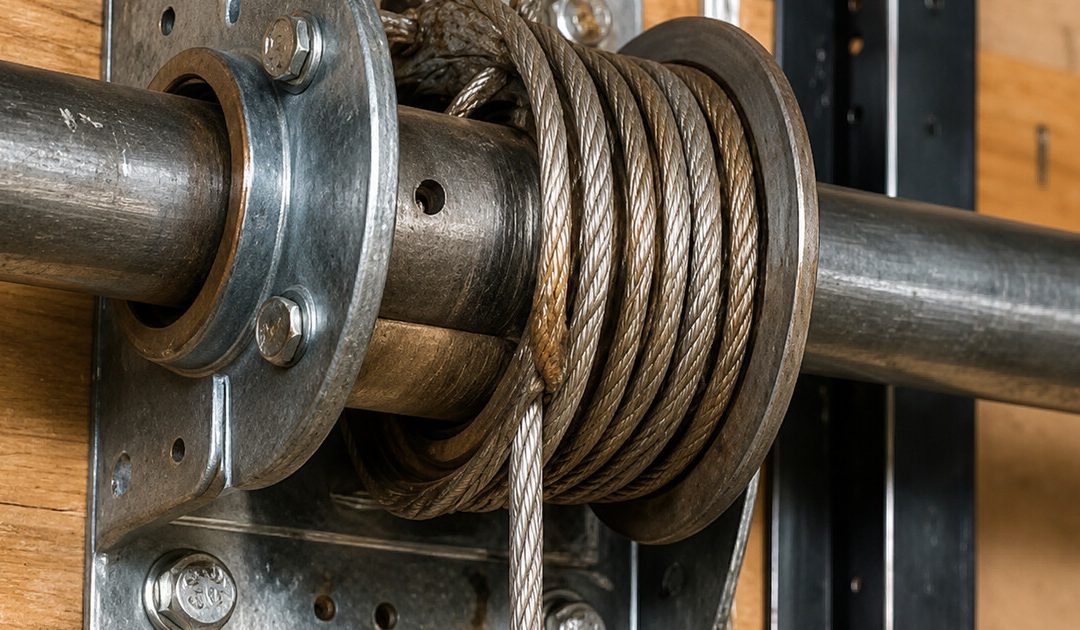
Springs get all the attention, but cables are what actually connect the spring system to the door. They run from the bottom bracket on each side up to a drum on the torsion bar, and they keep the door level as it travels.
The useful thing about cables is that unlike springs, they usually tell you they are failing.
The warning signs
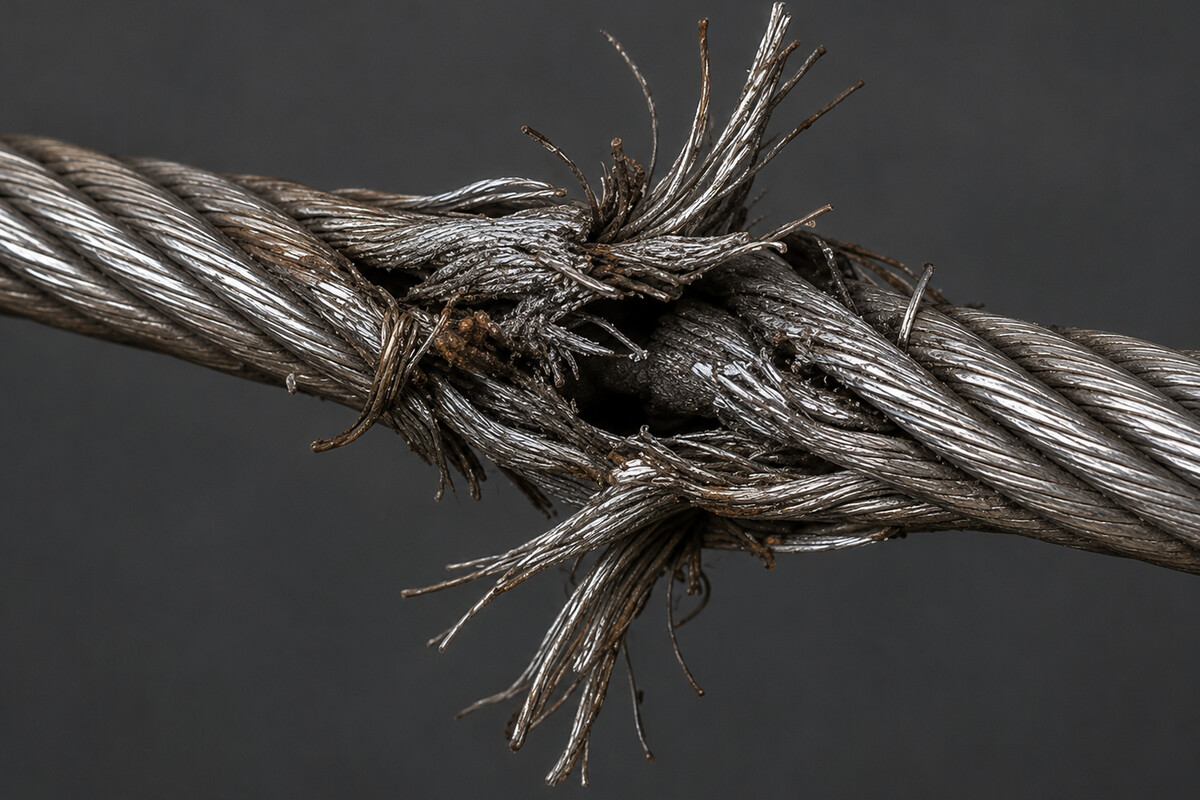
Fraying or broken strands
A lift cable is wound steel wire. As it wears, individual strands break and stick out. Run your eyes — not your hands — along both cables. Visible fraying means replacement, not monitoring.
Slack cable
Cables should stay taut through the full travel. A cable that goes loose at any point means it is coming off the drum, the spring tension is wrong, or something has shifted.
The door sits or travels crooked
One side higher than the other means the two sides are no longer lifting equally. This is the most visible symptom and the one people most often ignore for weeks.
The cable has jumped the drum
You can sometimes see the cable wrapped wrong, bunched, or off the grooves entirely.
Rust or corrosion
Less common here than in humid climates, but garages that take water under the door during monsoon get rust at the bottom bracket where the cable anchors — exactly the point under most load.
Grinding or scraping during travel
A cable rubbing where it should not creates noise and wears fast.
Why cables fail
- Age and cycles. Like springs, they have a finite working life.
- Spring failure. When a spring breaks, the shock load lands on the cables.
- Door imbalance. An unbalanced door loads one cable more than the other, and that one fails first.
- Track and roller problems. Anything that makes the door bind puts uneven strain on cables.
- Water and grit. Monsoon water at the bottom bracket plus abrasive dust accelerates wear.
- Improper prior repair. Wrong-length cables or incorrect winding sets up early failure.
What happens when one snaps
The supported side drops immediately. The door twists, often derailing rollers on the opposite side, and can jam diagonally in the opening. The remaining cable and the springs then carry loads they were not designed for.
If it happens while the door is moving, it happens fast. This is why we treat a frayed cable as urgent rather than routine.
What to do if a cable breaks
- Stop using the door and the opener.
- Do not try to lift it manually. The weight is no longer balanced and the door can drop.
- Keep everyone clear, especially if the door is partly open.
- Do not attempt to rewind the cable. The drum is on a shaft under spring tension.
- Call for service. See cable repair.
Cables are replaced in pairs
Both cables have done the same number of cycles under the same conditions. Replacing only the broken one leaves you with a matched-age cable that is next in line, and an unbalanced door in the meantime. Proper repair also means inspecting the drums, bearings and springs, since a cable rarely fails in isolation.
Making them last
- Keep the door balanced — this is the single biggest factor
- Have cables inspected during every annual tune-up
- Fix water intrusion so the bottom brackets stay dry
- Address track and roller problems before they load the cables unevenly
- Replace springs and cables together when both are near end of life
Get cables checked
If your door looks crooked or you can see fraying, do not wait for it to let go. We handle cable service across Tucson, with emergency response when one has already snapped.
Call 520-222-8817.