
You press the remote, the opener strains, and the door lifts an inch before stopping. Or you heard a bang like a gunshot from the garage last night and now nothing works. Both are the same failure: a broken spring.
It is the single most common garage door repair we run in Tucson, and it is also the one homeowners are most tempted to fix themselves. Here is what is actually happening, and why that temptation is worth resisting.
Springs do the lifting, not the opener
A garage door weighs somewhere between 130 and 400-plus pounds depending on material and insulation. Your opener motor cannot lift that, and it is not designed to. The springs do essentially all of the work by counterbalancing the door’s weight, and the opener simply guides it up and down.
That is why a door with a broken spring feels impossibly heavy by hand, and why an opener that tries to lift one usually ends up damaged too.
Torsion vs. extension springs
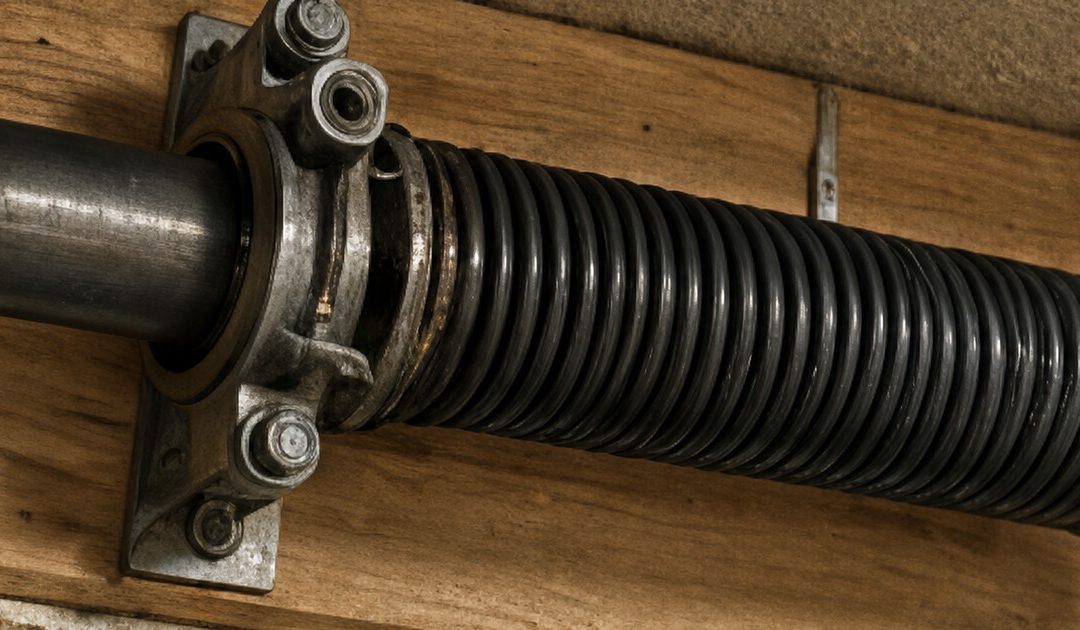
- Torsion springs mount on a bar above the door opening and wind as the door closes. Most Tucson homes have these.
- Extension springs run along the horizontal tracks on either side and stretch as the door lowers. Common on older installations.
Why they break
Cycle life, which is the real answer
Springs are rated in cycles, one cycle being one full open and close. A standard spring is often rated around 10,000 cycles. A household opening the door four times a day burns through roughly 1,460 cycles a year, which puts a typical spring somewhere in the seven-year range. Families with a busy garage as the main entrance can halve that.
So springs do not break because something went wrong. They break because they reached the end of a finite lifespan, usually with no warning at all.
What accelerates it in Southern Arizona
- Heat cycling. Garages here swing through enormous daily temperature ranges. Metal expands and contracts with every cycle, and that fatigue adds up.
- Dust and grit. Desert dust works into coils and moving parts, increasing friction and wear.
- Low humidity does help. One genuine advantage: we see far less rust-driven spring failure than humid climates do.
- Skipped maintenance. Springs that are never lubricated wear noticeably faster.
The warning signs, when there are any
- A loud bang from the garage, often at night as temperatures drop
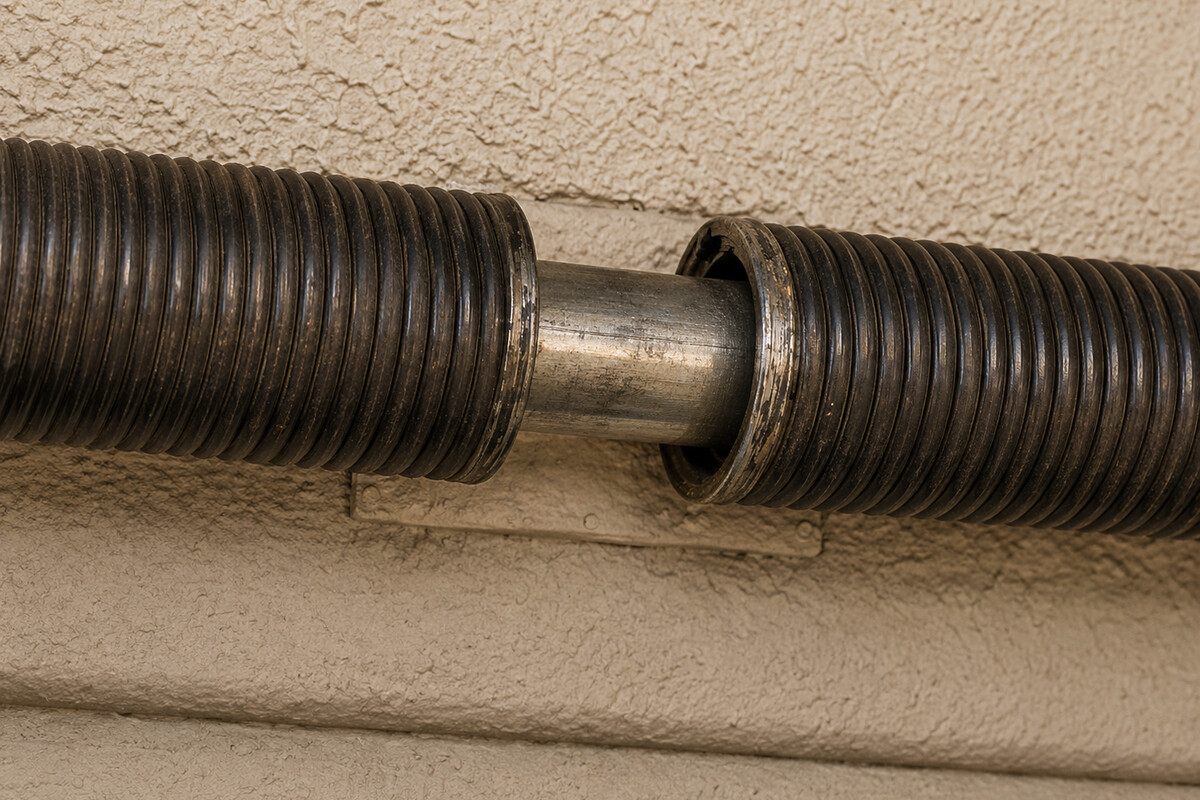
- A visible gap in the spring coil above the door
- The door lifts a few inches then stops, or the opener strains and gives up
- The door feels extremely heavy if you try to lift it manually
- The door closes fast and lands hard rather than settling
- The door looks crooked as one side lifts before the other
If you see any of these, stop using the door and stop using the opener. Continuing to run it turns a spring repair into a spring, cable and opener repair.
Why this is not a DIY job
A wound torsion spring stores an enormous amount of energy. Releasing it without proper winding bars and technique sends that energy somewhere, and it is usually into whatever is holding the bar. Injuries from spring replacement are serious ones: broken hands, facial injuries, worse.
There is also a subtler problem. Springs are matched to a specific door weight, and installing the wrong size leaves the door unbalanced. An unbalanced door destroys the opener, wears the cables and drums unevenly, and fails again sooner. Getting the spring right requires knowing the door’s actual weight and specifications.
What a proper replacement includes
- Weighing and measuring the door so the correct spring is specified rather than guessed.
- Replacing springs in pairs. If one broke, the other is the same age and the same number of cycles from failing. Replacing one is a false economy.
- Inspecting cables, drums, bearings and rollers, which take collateral damage when a spring fails.
- Winding to the correct tension so the door balances and holds at any position.
- Balance testing. Disconnected from the opener, a properly balanced door stays put halfway up rather than drifting.
- Checking opener force settings after the fact.
Ask about cycle life when you replace
Higher-cycle springs cost more up front and last considerably longer. For a household that uses the garage as the front door, that upgrade often makes sense. Ask us for the options when we quote your repair.
Same-day spring repair in Tucson
A broken spring leaves your car trapped and your garage insecure, so this is not a repair that waits. We handle broken spring repair across Tucson and the surrounding communities, with 24/7 emergency service when it happens at the worst possible time.
Call 520-222-8817 and describe what you heard and what the door is doing. We can usually tell you over the phone whether it is the spring.