
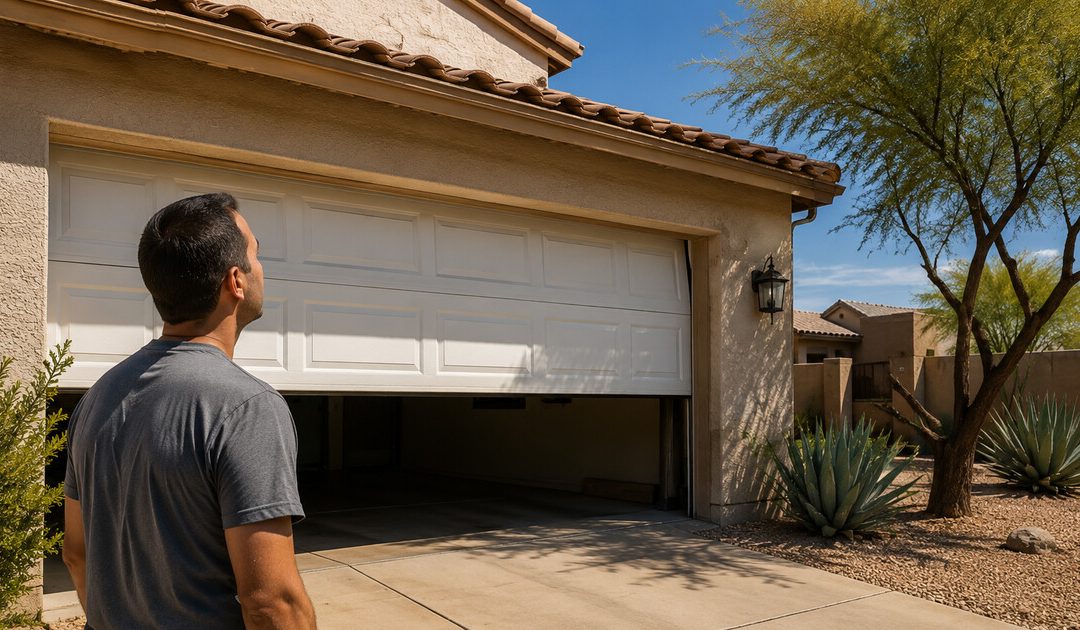
May is the last comfortable month to work in a Tucson garage. By late June the space is an oven, and every problem you did not deal with becomes a problem you deal with at 108 degrees, usually while the door is stuck.
Spend an hour now. Here is the checklist.
Start by listening and watching
Open and close the door twice. Stand outside for one cycle and inside for the other, and pay attention to:
- Noise that changed. New grinding, popping or scraping means something moved out of alignment or dried out.
- Jerky movement. A door should travel smoothly. Hesitation or shuddering points at rollers, tracks or spring balance.
- Crooked travel. One side lifting ahead of the other is a cable or spring issue and needs a technician.
- Speed changes. A door that slams down or races up is a balance problem.
The visual inspection
Springs, cables and hardware
Look at the springs above the door for any gap in the coils. Follow the cables on both sides, looking for fraying, kinks or rust. Check that brackets and bolts look tight. Do not adjust or loosen anything attached to a spring or cable.
Rollers
Worn rollers wobble, chip or sit unevenly in the track. Nylon rollers are quieter and last well in dust; steel ones wear faster here.
Tracks
Check for dents, bends and debris. Desert grit collects in the bottom of tracks and grinds away at everything running through it.
Weather seal
Inspect the bottom seal and the side and top stops. Sun destroys rubber, and a cracked, flattened seal lets in dust, water and heat. Ours is a climate that eats seals faster than most. See weather sealing.
Panels
Look for cracks, dents and rust. On a west-facing door, look for fading, chalking and warping from UV exposure.
The jobs you can safely do yourself
- Clean the tracks. Wipe out dust and grit with a damp cloth. Do not grease the inside of the tracks; rollers should roll, not slide.
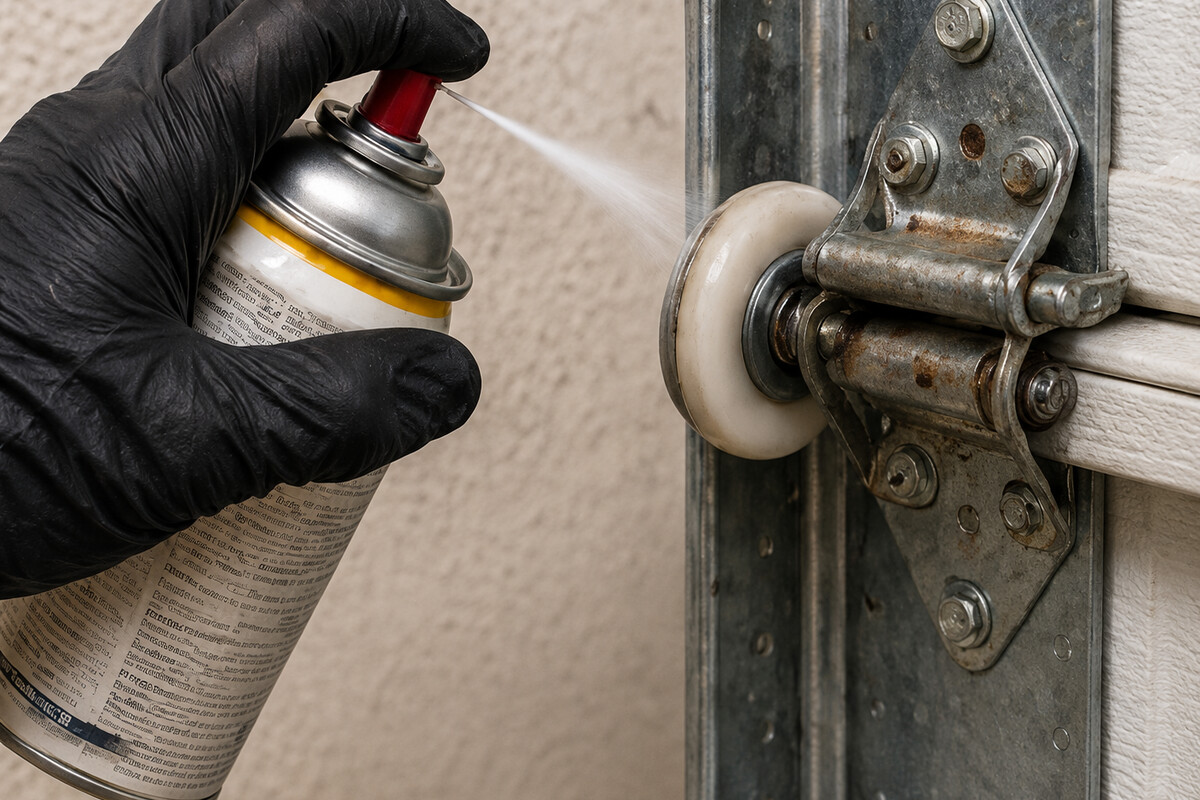
- Lubricate moving parts. Use a garage door lubricant, not WD-40, which is a solvent rather than a lubricant. Hit the hinges, rollers, springs and the opener rail. Twice a year here, given the dust.
- Tighten the visible hardware. Vibration loosens bolts on hinges and brackets over hundreds of cycles. Firm, not overtightened. Stay away from anything spring or cable related.
- Clean the photo-eye sensors. Dust on the lenses is the most common reason a door refuses to close. Wipe both, and check they still line up.
- Wash the door. Mild soap and water. It removes the grit that accelerates finish wear, and it is the difference between a door that looks eight years old and one that looks two.
Two safety tests worth running every season
The auto-reverse test
Place a solid object, a roll of paper towels works well, in the door’s path and close it. The door should hit the object and immediately reverse. If it does not, the opener needs adjusting before anyone uses that garage again.
The balance test
Pull the emergency release with the door closed, then lift the door by hand to roughly waist height and let go. A properly balanced door holds position. If it slams down or flies up, the spring tension is off, and that is a technician job. Reconnect the opener afterward.
What to leave to a professional
Springs. Cables. Anything requiring the door to be held in tension. Track realignment. Opener force and travel limit settings. These are the components that store or manage the door’s several hundred pounds of weight, and they are where DIY attempts go badly wrong.
Why May specifically
Everything on a garage door gets harder in summer. Lubricants thin and run in extreme heat. Metal expands, tightening tolerances that were fine in March. Seals that are already brittle finally split. Openers work harder in a garage that sits above 120 degrees. Springs that were near the end of their cycle life tend to let go during the biggest temperature swings.
Fixing a small thing in May costs less than fixing the cascade it becomes in July.
Book a professional tune-up
A maintenance and tune-up visit covers everything above plus the adjustments you should not make yourself: spring balance, opener force settings, track alignment and full hardware torque. If the noise is what brought you here, our noisy door service is the more specific fix.
Call 520-222-8817 to get on the schedule before the heat sets in.