
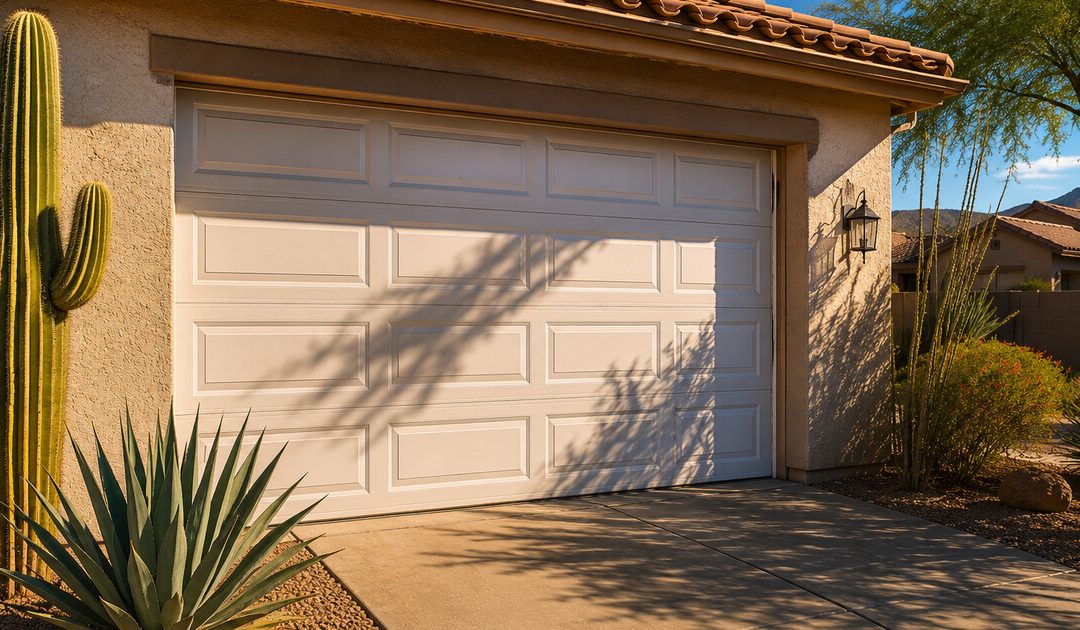
Park in an uninsulated Tucson garage in July, come back at four in the afternoon, and the air inside will be hotter than the air outside. A sealed box with a large metal panel facing the sun does exactly what you would expect it to do.
That heat is not just uncomfortable. It shortens the life of the door, the opener and everything you store in there, and it pushes into the rooms sharing a wall with the garage.
Why a garage gets hotter than outside
Three things stack up. The door absorbs direct solar radiation across a large surface and re-radiates it inward. The concrete slab and block walls store heat through the day and release it into the evening. And unlike your house, the garage has no conditioned air and usually very little ventilation.
A west-facing door takes the worst of it, catching full sun through the hottest part of a Tucson afternoon.
What the heat does to the door itself
Metal expands and contracts, every single day
Daily swings of forty degrees or more mean panels, tracks and hardware are constantly moving. That thermal cycling loosens fasteners, wears hinge points, and fatigues springs faster than the same door would age in a mild climate.
UV attacks everything on the outside
Paint fades and chalks. Vinyl and composite trim becomes brittle. Rubber weather seals crack, flatten and split, which is why seals in Arizona need replacing more often than manufacturers’ generic guidance suggests. See weather sealing.
Lubricants thin out
Grease that was fine in February runs and migrates in summer, leaving rollers and hinges dry exactly when they are working hardest.
Openers overheat
Opener motors have thermal protection that shuts them down when they get too hot. In a garage sitting well above 120 degrees, an opener working a heavy or poorly balanced door can trip that protection and simply stop. See opener repair.
What insulation actually does
Insulated doors are rated by R-value, which measures resistance to heat flow. Higher numbers slow heat transfer more effectively.
- Non-insulated single-layer steel. Cheapest, noisiest, and effectively a heat radiator in an Arizona summer.
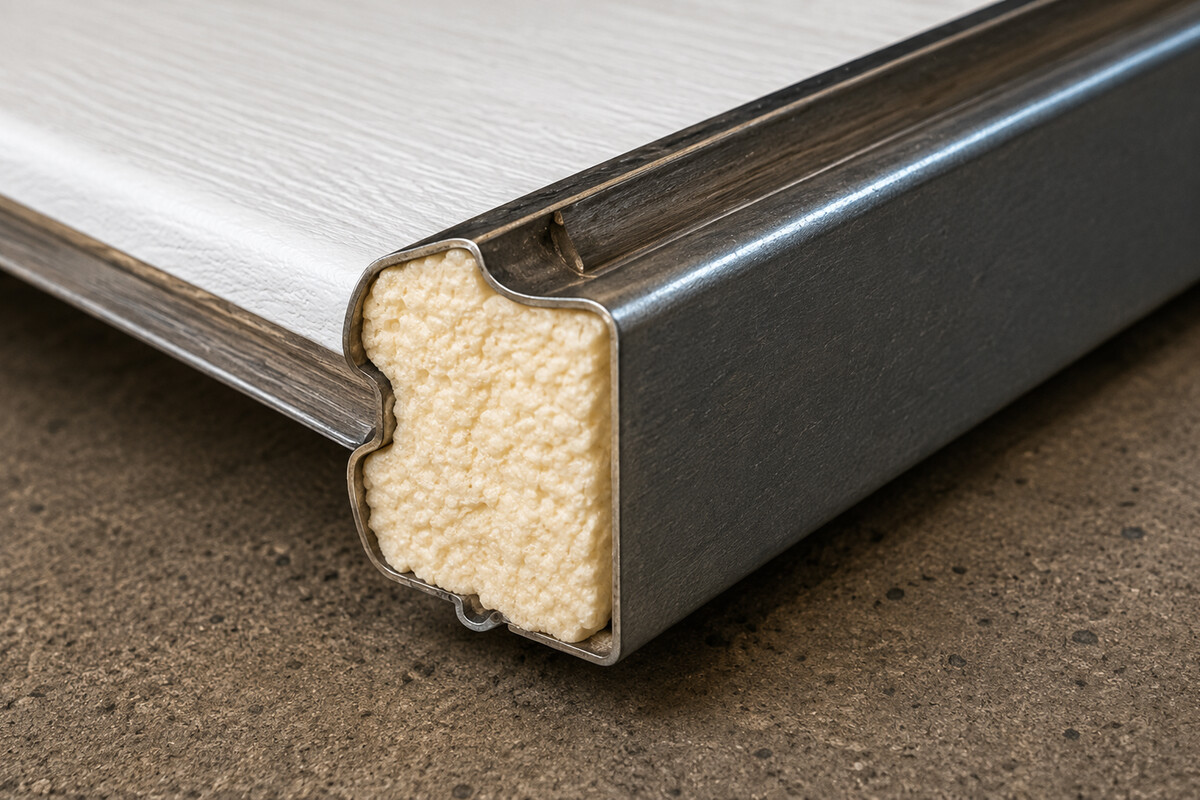
- Polystyrene insulated panels. Rigid foam board between steel layers. A meaningful improvement at moderate cost.
- Polyurethane insulated panels. Foam injected and bonded to the steel skins, which also makes the panel structurally stiffer and quieter. The strongest performer, and generally what we recommend for west and south-facing doors here.
Worth being realistic: insulation will not turn a garage into a cool room. What it does is slow the heat coming in, lower the peak temperature, reduce how much heat pushes into adjoining living space, and make the door quieter and more rigid in the process.
Who benefits most
- Anyone with living space above or beside the garage, where the AC is fighting that heat all afternoon
- Homes where the garage is a workshop, gym or laundry
- West-facing doors taking full afternoon sun
- Households storing anything heat-sensitive: paint, electronics, tools, pet food, wine
- Anyone bothered by door noise, since insulated panels are markedly quieter
Insulation is only half the job
An insulated door with a failed seal still leaks heat, dust and water. The weather seal at the bottom, the stops along the sides and top, and the gap where the door meets the frame all matter. In Tucson the seal usually fails long before the door does, and replacing it is a fraction of the cost of a new door.
Sun damage worth catching early
Look at your door in the afternoon light. Chalky, faded paint, brittle trim, split seals, warped or bowed panels, and hardware that shows rust at the fasteners all indicate a door aging under UV load. Some of it is cosmetic. Warping and hardware failure are not.
Talk it through
If your garage is unbearable by mid-afternoon, we can tell you whether the fix is a new seal, an insulated replacement door, or something in between. Call 520-222-8817.