
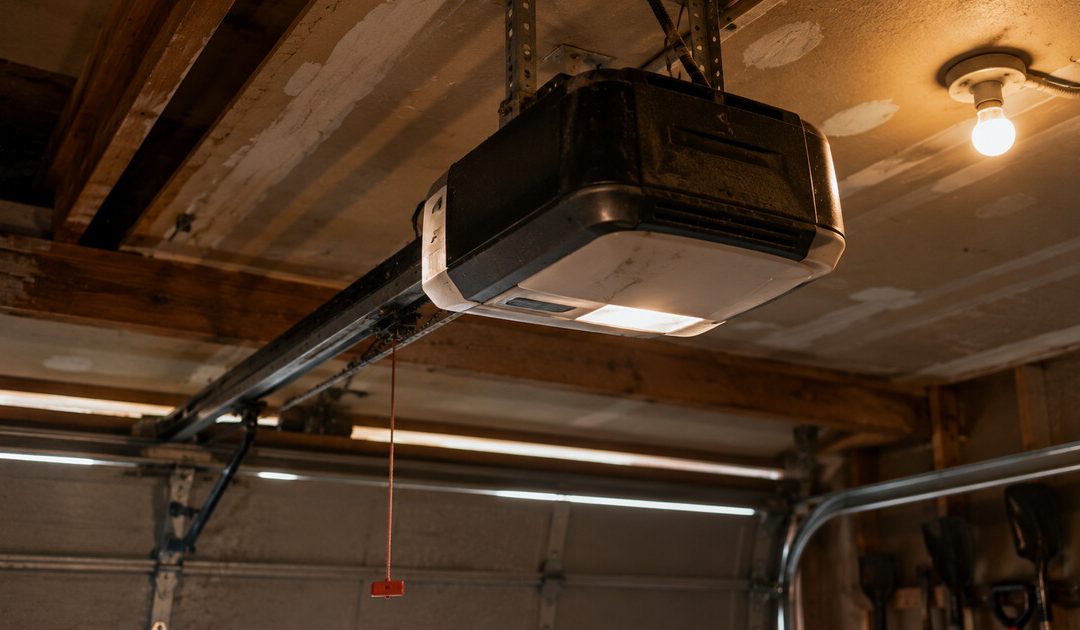
A pattern we see every Tucson summer: the opener works fine in the morning, refuses to cooperate at four in the afternoon, then works again after dark. Homeowners assume the unit is dying. Usually it is heat, and usually there is a specific cause worth understanding before anyone buys a new opener.
Openers have thermal shutdown built in
Motors generate heat while running. In a garage already sitting above 120 degrees, an opener has nowhere to shed it. Most units include thermal overload protection that cuts power when the motor exceeds a safe temperature, and it resets once things cool.
That is the classic symptom: dead in the afternoon, alive in the evening. The protection is doing its job. The real question is why the motor is working hard enough to trigger it.
The most common underlying cause: the door, not the opener
An opener should guide the door, not lift it. The springs carry the weight. When springs weaken or fall out of balance, the opener starts doing work it was never designed for, and heat makes that borderline situation fail outright.
Quick test: close the door, pull the emergency release, and lift the door by hand to waist height. A balanced door stays where you put it. If it drops or rises on its own, your springs need attention, and no amount of opener repair will fix the underlying problem. See spring repair.
Other heat-driven failures
Lubricant thinning
Grease that worked in winter thins and migrates in summer, leaving rollers, hinges and the opener rail dry. More friction, more motor load, more heat.
Photo-eye sensors and sunlight
Direct sun striking a photo eye can wash out the receiver and make the opener think the beam is broken, so the door refuses to close or reverses partway. Tucson’s low afternoon sun angle causes this seasonally. Sensors also drift out of alignment as brackets expand and contract.
Circuit boards and capacitors
Heat is hard on electronics. Logic boards and capacitors degrade faster in an environment that cycles between 120 degrees and 50 all year, which is why openers here often have shorter working lives than the manufacturer suggests.
Remote and keypad batteries
Heat shortens battery life dramatically, and a wall-mounted keypad in direct sun suffers worst. Before assuming the opener has failed, try a fresh battery and the wall button.
Chain and belt tension
Metal expands. A chain that was correctly tensioned in February can sag in July, causing jerky travel and slapping noise.
What you can check yourself
- Wall button vs. remote. If the wall button works and the remote does not, it is the remote, not the opener.
- Clean and align the photo eyes. Wipe both lenses and confirm the indicator lights are steady, not blinking.
- Lubricate the moving parts with a proper garage door lubricant, including the rail.
- Run the balance test described above.
- Listen. A motor that hums without moving the door is a different problem from one that does not respond at all.
When repair makes sense, and when it does not
Repair is usually right for sensor problems, force and limit adjustments, worn rollers, chain tension, remotes and most single-component failures.
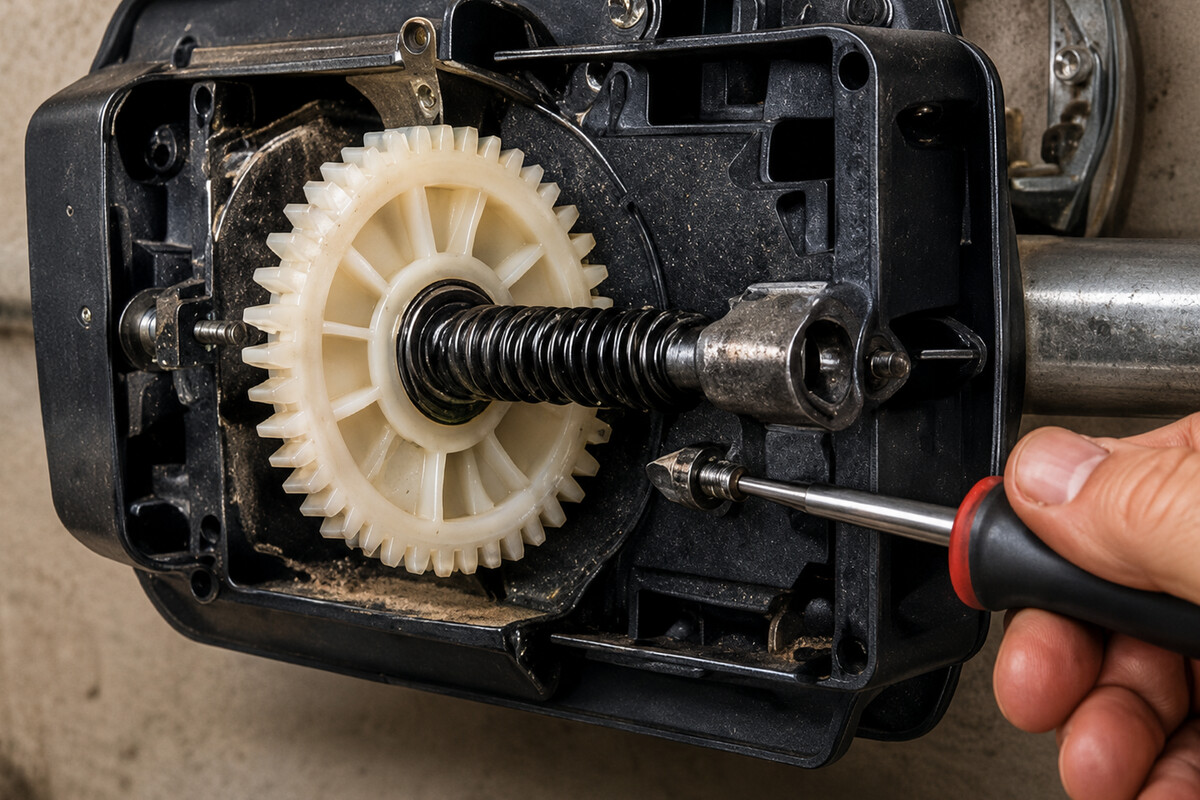
Replacement starts making sense when the unit is old enough that parts are scarce, when the drive gear has stripped on an already aging opener, or when repeated failures stack up. Modern units also bring genuinely useful features: quieter belt drives, battery backup for outages, and smart connectivity so you can confirm from anywhere that the door actually closed.
One safety note worth knowing: if your opener predates photo-eye safety sensors entirely, replace it. That is not a preference, it is a genuine hazard.
Helping an opener survive a Tucson summer
- Keep the door properly balanced so the motor is not lifting weight
- Lubricate twice a year, before summer and after monsoon
- Improve garage ventilation where you can
- Shade or reposition sun-struck photo eyes and keypads
- Do not cycle the door repeatedly in the hottest part of the day
Get it diagnosed properly
We handle opener repair and new opener installation across Tucson. Tell us the pattern — time of day, what the lights do, whether the wall button behaves differently — and we can usually narrow it down before we arrive.
Call 520-222-8817.