
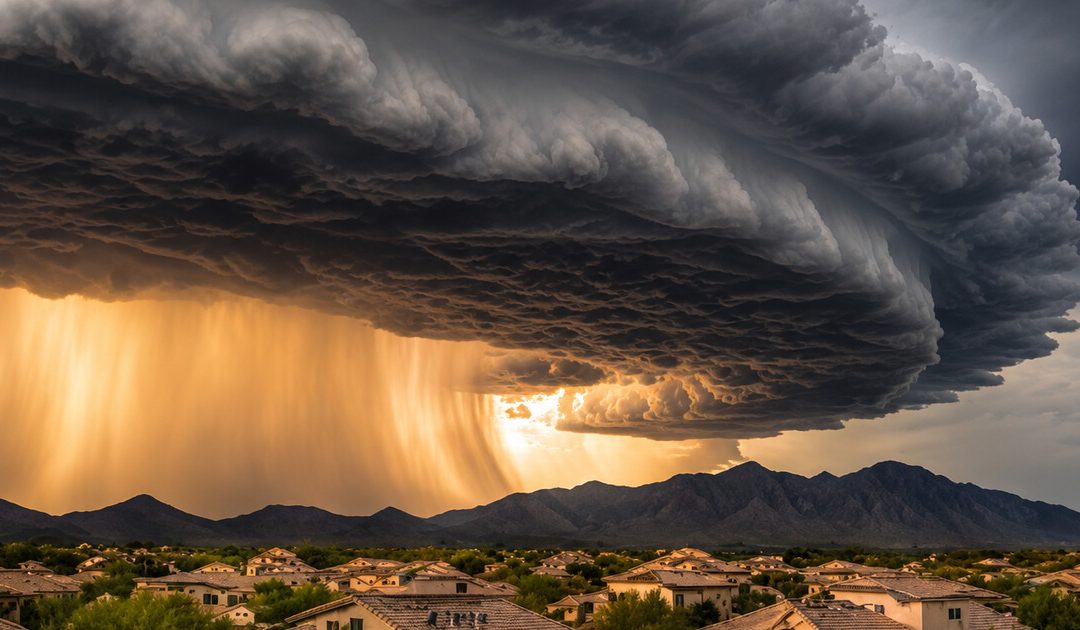
Monsoon season is the busiest stretch of our year, and the reason is simple: a garage door is the largest moving panel on your house, and monsoon throws wind, water, dust and debris at it in fifteen-minute bursts.
Here is what each part of a storm actually does, and what to check afterward.
Wind: the one that bends things
A microburst can put sustained wind and gusts well beyond normal against the face of your door. A double-wide door is roughly 16 feet of sail.
What it causes:
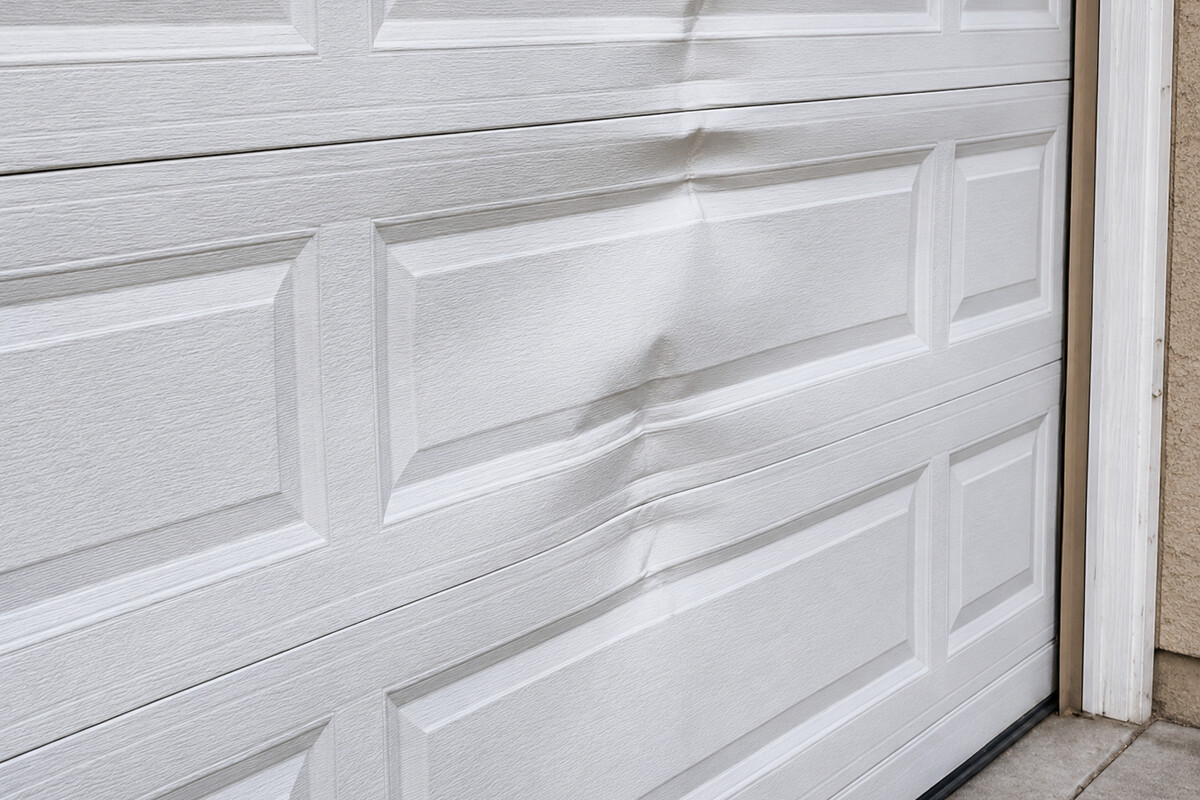
- Bowed or dented panels, often visible only from an angle
- Doors pushed out of alignment, then derailing next time they run
- Bent tracks and loosened brackets
- Complete blow-in on doors already weakened or poorly braced
Older or non-reinforced doors are the usual casualties. If yours flexes noticeably in wind, ask us about reinforcement bracing.
Dust: the one that wears things out
A haboob drives fine grit into every gap. It settles in tracks, works into roller bearings, coats the opener rail and gets into the motor housing.
What it causes: increased friction, faster roller and hinge wear, sensor lenses obscured so the door will not close, and abrasive grit grinding against the weather seal every cycle.
Dust damage is gradual, which is why it goes unnoticed until something seizes.
Water: the one that gets underneath
Monsoon rain arrives sideways and in volume. Where the driveway slopes toward the house — very common in Tucson — water finds the gap under the door.
What it causes: water across the garage floor, damage to whatever was stored on it, rust starting at the bottom panel and hardware, and swelling on wood or composite doors. A failed weather seal is usually the entry point.
Debris and power: the rest of it
Palm fronds, patio furniture and neighbours’ unsecured items become projectiles. And outages are routine during storms, which means an opener with no battery backup leaves you pulling the emergency release in the dark.
What to check after every significant storm
- Look at the door from an angle, not straight on. Bowing and denting show up in the reflection line.
- Run the door one full cycle and watch it. Hesitation, new noise or crooked travel means something moved.
- Check the tracks for grit, debris and any new bend.
- Wipe the photo-eye sensors. Dust on the lenses is the single most common post-storm complaint.
- Inspect the bottom seal and look for daylight along the base.
- Look for water lines on the inside wall and at the base of the door.
- Check cables and springs visually for anything obviously out of place. Do not touch them.
Before the next storm
- Replace a failing weather seal now rather than after water is inside
- Clear the tracks of accumulated grit
- Have loose hardware tightened during a tune-up
- Secure anything in the yard that can become a projectile
- Consider battery backup if outages regularly leave you stuck
- Keep the door closed when a storm is forecast — an open door lets wind get inside the garage, and interior pressure is what blows doors out
If the storm already did damage
A door that is bent, derailed or will not close is a security problem as much as a repair problem. Our 24/7 emergency repair exists for exactly these nights, and we cover Marana, Oro Valley, Vail and the wider Tucson area.
Call 520-222-8817.