
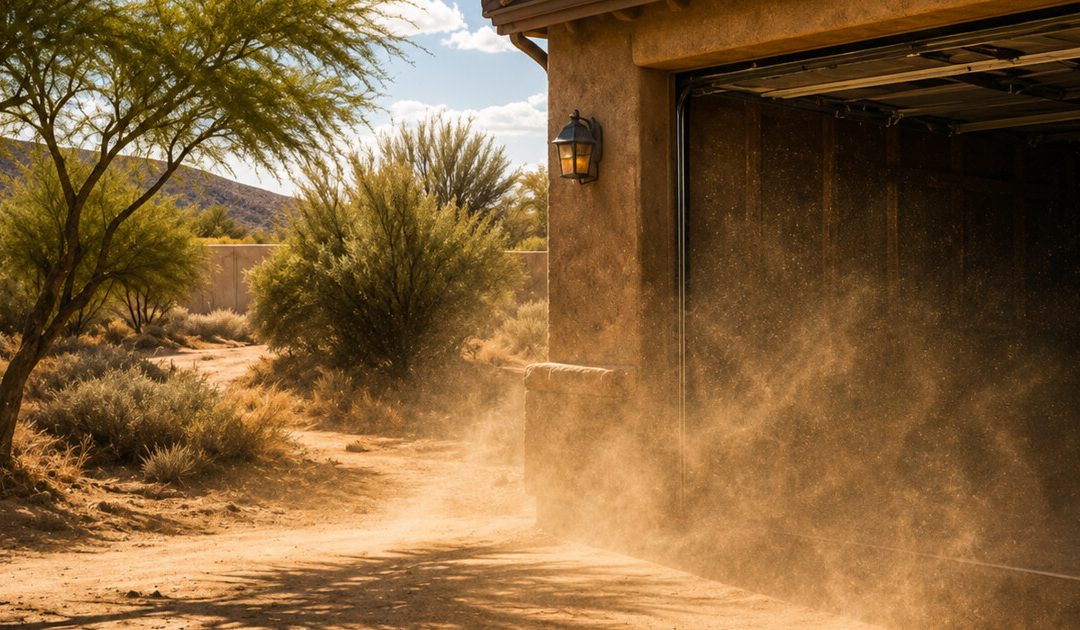
Most garage door wear in Southern Arizona is not dramatic. It is abrasive. Fine desert dust settles into every track, bearing and hinge, and then several hundred pounds of door grinds across it a few thousand times a year.
Cleaning the tracks is fifteen minutes of work that meaningfully extends the life of the expensive parts.
Why dust matters more here
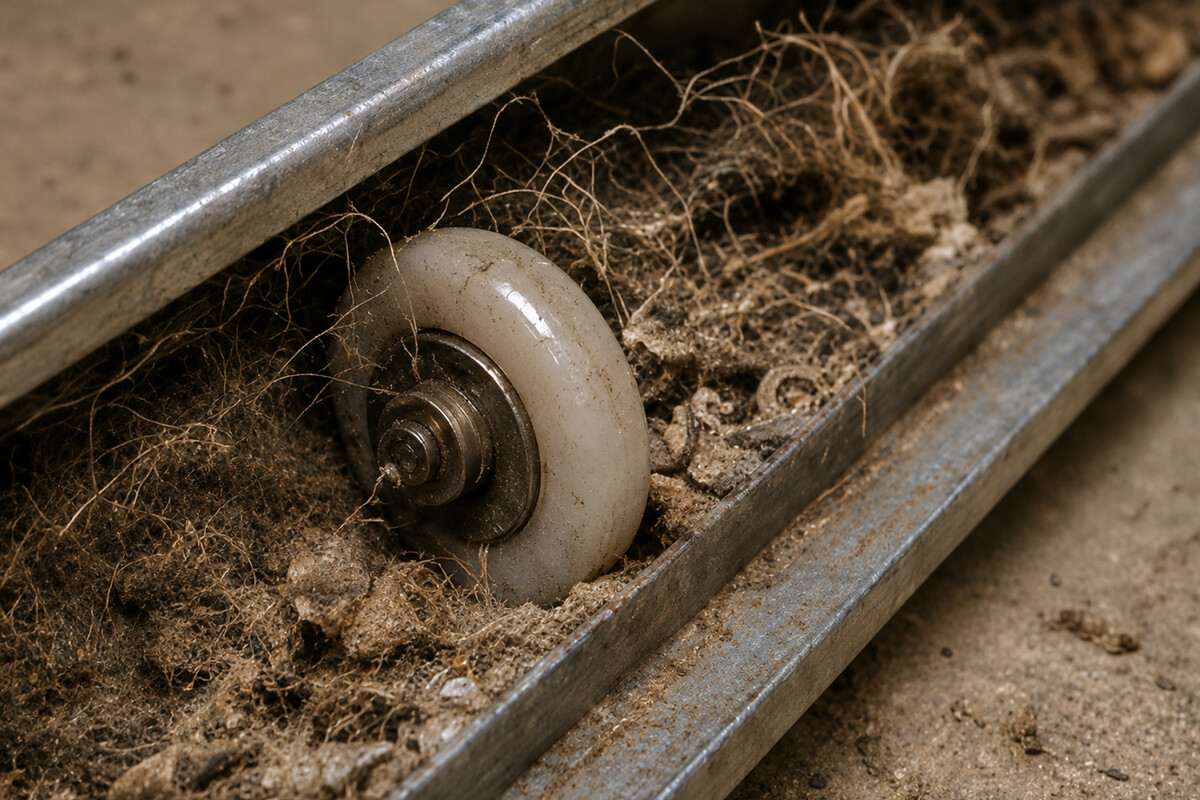
After a haboob or a windy afternoon, fine grit is everywhere — including inside the garage, because dust gets through gaps that keep water out. It collects in the bottom of the vertical tracks, where it forms a gritty paste with any lubricant present.
That paste is effectively grinding compound. It wears roller bearings, scores the track surface, and increases the load on the opener. Combine it with summer heat thinning lubricant, and you have the two conditions that age a door fastest.
How to clean tracks properly
- Close the door and unplug the opener. Nothing should move while your hands are in the tracks.
- Vacuum first. A shop vac with a narrow nozzle pulls loose grit from the bottom of the vertical tracks, which is where it collects.
- Wipe with a damp cloth. Work along the inside faces of the track. An old toothbrush or a rag wrapped around a screwdriver reaches the corners.
- Use mild soap for the stubborn buildup, then dry the track thoroughly.
- Check for dents and bends while you are in there. Anything bent is a technician job — see off-track repair.
- Inspect the rollers. Wobble, chips or a roller that slides instead of rolling means replacement.
The mistake almost everyone makes
Do not lubricate the inside of the tracks.
It feels like the obvious thing to do, and it is exactly wrong. Rollers are meant to roll along a clean, dry track. Grease inside the track makes them slide instead, and in the desert that grease becomes a magnet for dust, creating the abrasive paste described above.
Lubricate the moving parts instead: hinges, roller bearings (not the wheel face), springs, and the opener rail. Use a purpose-made garage door lubricant — silicone or lithium based. Not WD-40, which is a solvent that strips lubricant rather than providing it.
How often, in this climate
- Quick visual check: monthly, and after any significant dust storm
- Proper clean: twice a year — before summer and after monsoon season ends
- Lubrication: twice a year, matching the same schedule
- Professional tune-up: annually
That is more frequent than manufacturer guidance, which assumes a climate without our dust load.
Reducing how much dust gets in
- Fix the weather seal. The biggest single lever. A failed bottom seal is an open invitation for grit. See weather sealing.
- Check the side and top stops as well as the bottom.
- Keep the door closed during dust events.
- Sweep the garage floor regularly so the dust already inside is not recirculated.
- Consider nylon rollers if you are replacing worn steel ones. Quieter, and they cope better with grit.
Signs the grit has already done damage
- Grinding or scraping during travel
- Rollers that visibly wobble or hop
- Visible scoring on the track surface
- The opener working noticeably harder than it used to
- Jerky rather than smooth travel
Any of those means the cleaning stage has passed and parts need inspecting.
Let us do the annual version
A professional tune-up covers cleaning, correct lubrication, roller and hardware inspection, balance and opener settings. If the noise has already started, our noisy door service tracks down the source.
Call 520-222-8817.