
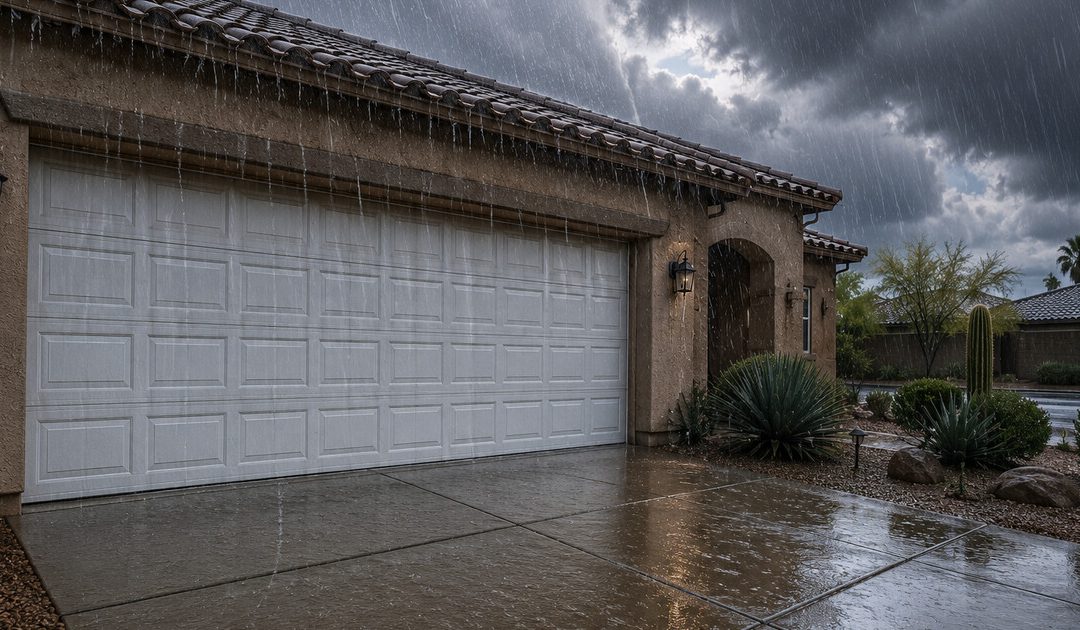
Arizona’s monsoon runs from roughly mid-June through September, and it does not arrive politely. A microburst can push horizontal rain and a wall of dust at your house for fifteen minutes, and every gap around your garage door is an invitation.
The seal is a cheap part. Replacing it before the first storm is one of the highest-value maintenance jobs you can do in June.
What a failed seal lets in
- Water. Driving monsoon rain does not fall straight down. It comes in sideways under a flattened bottom seal and across a garage floor that usually slopes inward at least somewhere.
- Dust. The fine grit that coats everything after a haboob comes in through the same gaps, and it works into door tracks, opener rails and everything you store.
- Heat. A quarter-inch gap along a sixteen-foot door is a lot of hot air exchange all summer.
- Pests. Scorpions, roof rats, crickets and snakes all get through gaps most homeowners consider too small to matter. Scorpions in particular need very little clearance.
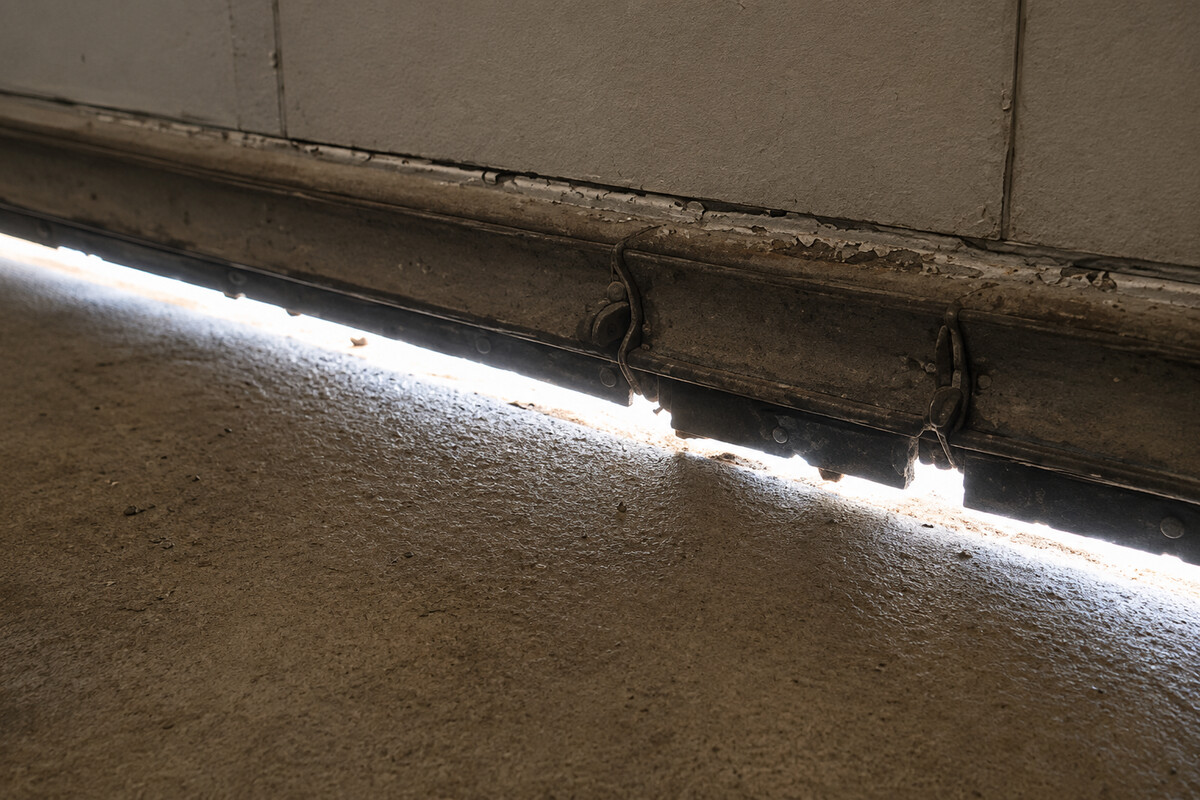
The two-minute check
Close the door completely, then go inside the garage in daylight and turn off the lights.
If you can see daylight, that is your gap. Look along the full width of the bottom, up both sides, and across the top. Then look at the physical condition of the seals:
- Bottom seal cracked, split, flattened or brittle rather than flexible
- Side and top stop weatherstripping pulled away, warped or crumbling
- Threshold seal, if you have one, lifting off the concrete
- Daylight at the corners even when the middle looks fine
One extra Tucson-specific check: press the bottom seal with your thumb. Sun-baked rubber goes hard and stops rebounding, and a seal that does not compress no longer seals even when it looks intact.
The parts involved
Bottom seal
A rubber or vinyl gasket in a retainer along the bottom of the door. The workhorse, and the part that fails first here. It takes UV, heat and grinding against concrete every cycle.
Side and top stop weatherstripping
Attached to the frame, pressing against the door face. Sun destroys these on the exposed side, and warped frames make them fit poorly.
Threshold seal
Bonded to the garage floor rather than the door. Very effective against driving rain and blowing dust, especially where the driveway slopes toward the house — a common Tucson layout. Worth asking about if you get water in every storm.
Brush seals
Common on commercial and roll-up doors. Excellent against dust, less so against water. See commercial repair.
Why seals fail faster in Southern Arizona
Manufacturer lifespan estimates assume a temperate climate. Here you have relentless UV on the exposed face, surface temperatures well above air temperature, a huge daily temperature swing that expands and contracts the material constantly, and abrasive dust in every moving joint. A seal that might last a decade elsewhere often needs replacing in a fraction of that time.
That is not a defect. It is the climate, and planning for it is cheaper than being surprised by it.
Do it before the first storm, not after
Once water has been under the door, you are not just replacing a seal. You are dealing with whatever was stored on that floor, possible drywall damage at the base of the walls, and rust starting on the bottom panel and hardware. Dust is the same story: after a haboob it is already in the tracks, the opener and the motor housing.
Early June is the window.
Get sealed before the rains
We handle weather sealing for residential and commercial doors across Tucson, and it pairs naturally with an annual tune-up so the whole door is ready for storm season at once.
Call 520-222-8817 before the first big storm rather than the morning after it.